
Why Pharma Companies Need Tender Tracking Software
Winning tenders can provide pharma companies with access to large-volume sales and
significant revenue opportunities. It can provide access to public healthcare systems, hospital
networks, and geographic regions.
Responding to a hospital tender, procurement tender, or government pharma tender, pharma
companies are expected to demonstrate competitive pricing, complete paperwork, quality
standards, and regulatory compliance.
The Pharmaceutical Tender Management involves multiple stakeholders, including the Tender,
Sales and Commercial, Pricing, Supply Chain, Quality, Regulatory, Finance, and Legal teams.
This process involves cross-functional coordination, complex documentation, pricing pressure,
tight deadlines, and the probability of disqualification due to errors.
The bid framework, when managed traditionally through emails, Excel spreadsheets, shared
folders, and phone calls, may result in missed deadlines as the number of tenders increases.
Challenges of Managing Pharma Tenders Manually
Missing Target Dates
Managing the tendering procedure manually may result in missing due dates, causing bids to be
rejected and leading to lost potential revenue and market share.
Scattered Documentation
When files are accessed through multiple systems, people may submit outdated or incomplete
documents, potentially resulting in disqualification or compliance risks.
No Visibility into Tender Status
Without a centralized system, teams working on the bid may lack visibility into progress,
pending actions, and approvals, which can lead to missed actions and ultimately the loss of
contract opportunities.
Poor Collaboration Across Teams
Email follow-ups may delay approvals, create miscommunication between departments, and
drastically reduce a company's capacity to respond to multiple tenders simultaneously.
All these challenges combined can result in poor team coordination, tender disqualification,
compliance issues, lost bids, and reduced market share.
Why Pharma Companies Need Tender Tracking Software
Pharma Tender Tracking Software is a digital platform that automates tendering workflows and
helps users identify, manage, track, collaborate on, and analyze contracts throughout their
lifecycle. It is a central workspace where all participating departments can monitor opportunities,
deadlines, documents, approval, submissions and outcomes.
Never Miss a Due Date
Tender Management Software automatically monitors new tenders and key dates, reducing the
risk of missing valuable business prospects.
Centralized Visibility
It provides a single dashboard to monitor all active, upcoming, submitted, won, and lost tenders.
Improved Collaboration
It enables different team members to work on the same tender through a shared workstream.
Better Document Governance
Tender Management Software stores files and templates in a unified repository, eliminating errors and version-control issues.
Faster Tender Submission and Lower Compliance Risk
Automation helps accelerate responses and ensures that required documents and certifications are submitted correctly and on time.
Better Win Rates
With improved transparency, coordination, and pricing decisions, companies can strengthen their
bidding strategy and improve their chances of winning contracts.
Forecasting and Planning
Tender pipeline insights help supply chain and manufacturing teams plan production and
resource allocation more effectively.
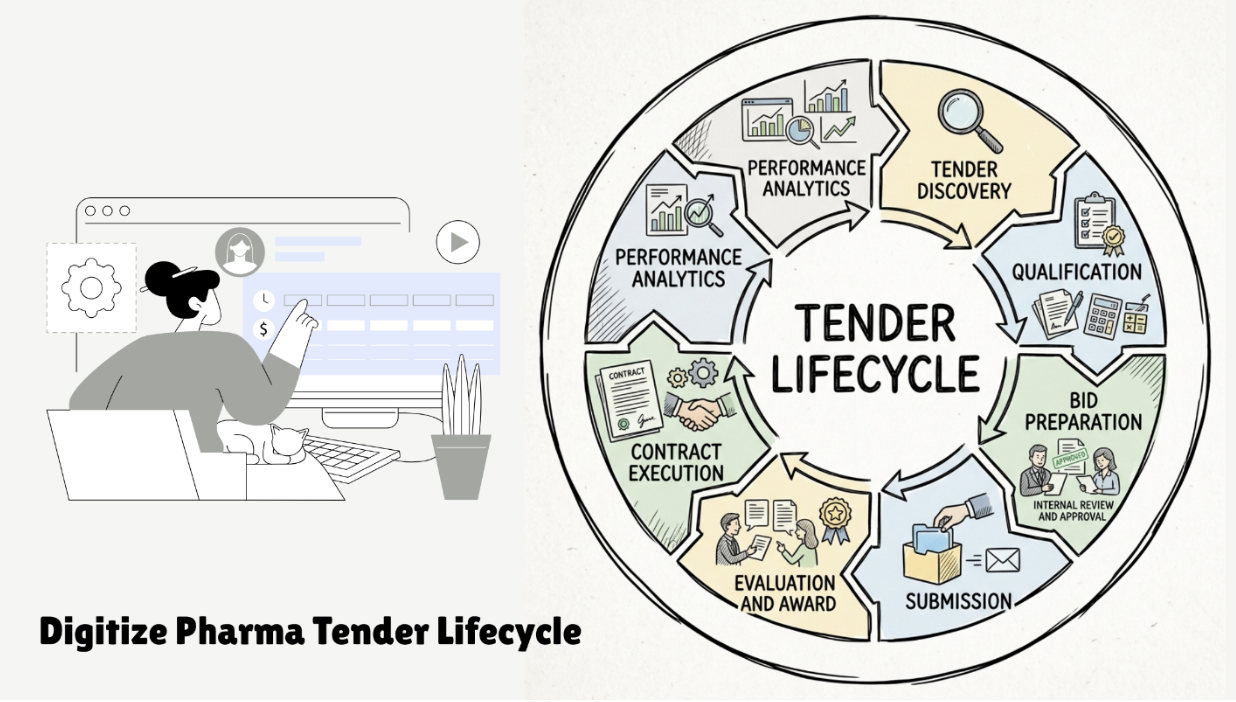
Tender Lifecycle at a Glance
Tender Discovery
∙ Monitoring relevant government, hospital, and procurement portals.
∙ Identifying relevant contract opportunities and tracking key details and dates.
Qualification
∙ Bid analysis and participation decision.
∙ Assessing profitability, capacity, competition, and regulatory readiness.
Bid Preparation
∙ Collecting pricing inputs and compiling documents.
∙ Preparing proposals.
Internal Review and Approval
∙ Obtaining approvals from various departments and stakeholders.
Submission
∙ Submitting proposals through procurement portals or e-tender systems.
Evaluation and Award
∙ The buyer evaluates compliance, quality, capacity, pricing, and other bid requirements.
∙ The contract is awarded to the selected supplier.
Contract Execution
∙ Manufacturing and delivery of products.
∙ Monitoring contract obligations and supply commitments.
Performance Analytics
∙ Analyze win/loss rates and track competitor activity.
∙ Streamline future bidding strategies.
Key Benefits of Tender Tracking Software
Automated Reminders
Automatically alerts about submissions, document expiries, and approval due dates, eliminating
reliance on manual processes.
Centralized Document Management
Stores file records in a single repository and ensures access to the latest approved versions. It
also helps reduce duplication and compliance errors.
Workflow Approvals
Automates review and confirmation across the system, speeds up responses, and reduces
bottlenecks.
Real-Time Dashboards
Provides a real-time view of active, upcoming, submitted, won, lost, and historical tenders.
Audit Trails
Maintains a transparent history of actions, approvals, and changes, supporting audits,
compliance, and governance requirements.
Reduces Administrative Costs
Reduces administrative effort and helps prevent costly tender disqualifications caused by missed
deadlines or incomplete documentation.
Role-Based Access
Allows users to access only the tenders, records, and information relevant to their roles.
How Digital Tender Management Creates Business Value
Improving Operational Efficiency
Automated tracking, standardized workflows, centralized documentation, and streamlined
approvals help teams manage a larger number of tender opportunities without proportionally
increasing administrative workload.
Increases Bid Success Rates
Ensures complete and accurate submissions, provides access to historical data, and helps avoid
errors.
Enhances Compliance and Reduces Risk
Ensures that only approved and current documents are used in submissions, creates audit trails,
and reduces compliance risks.
Provides Complete Visibility for Sales, Commercial & Management Teams
Real-time dashboards provide a consolidated view of all bid activities. Sales and commercial
teams can monitor pipeline value, market opportunities, and competitor activity.
It enables better decision-making, improved forecasting, and stronger business alignment.
Successful pharma tender management requires early opportunity identification, strong
stakeholder cooperation, centralized document and workflow coordination, data-driven
decisions, automated tracking and approvals, and continuous performance analysis.
Real-World Example: Simplifying Pharma Tender Management
A pharmaceutical MNC was facing challenges in managing hospital tenders due to manual
requisition processes, delayed approvals, inconsistent documentation, and limited visibility
across departments. Keacyte's Tender Module helped standardize the process through structured
tender requests, automated approval workflows, role-based notifications, compliance checks, and
real-time tracking. This helped the company streamline tender operations, improve transparency,
and respond more efficiently to hospital bidding opportunities.
Read the full case study → Simplifying Pharma Tender Process
Keacyte Tender Management Module
Keacyte Tender Management Module digitizes the complete tender lifecycle through automated workflows, file governance, real-time tracking, audit trails, and role-based access, helping pharma companies improve operational efficiency, compliance, stakeholder collaboration, visibility, and tender win rates.
Conclusion
By digitizing tender management, pharma companies can streamline processes, reduce manual effort, strengthen collaboration, and respond faster to bid opportunities. Ultimately, a tender tracking system can provide a strategic advantage to pharma organizations rather than being an administrative burden.